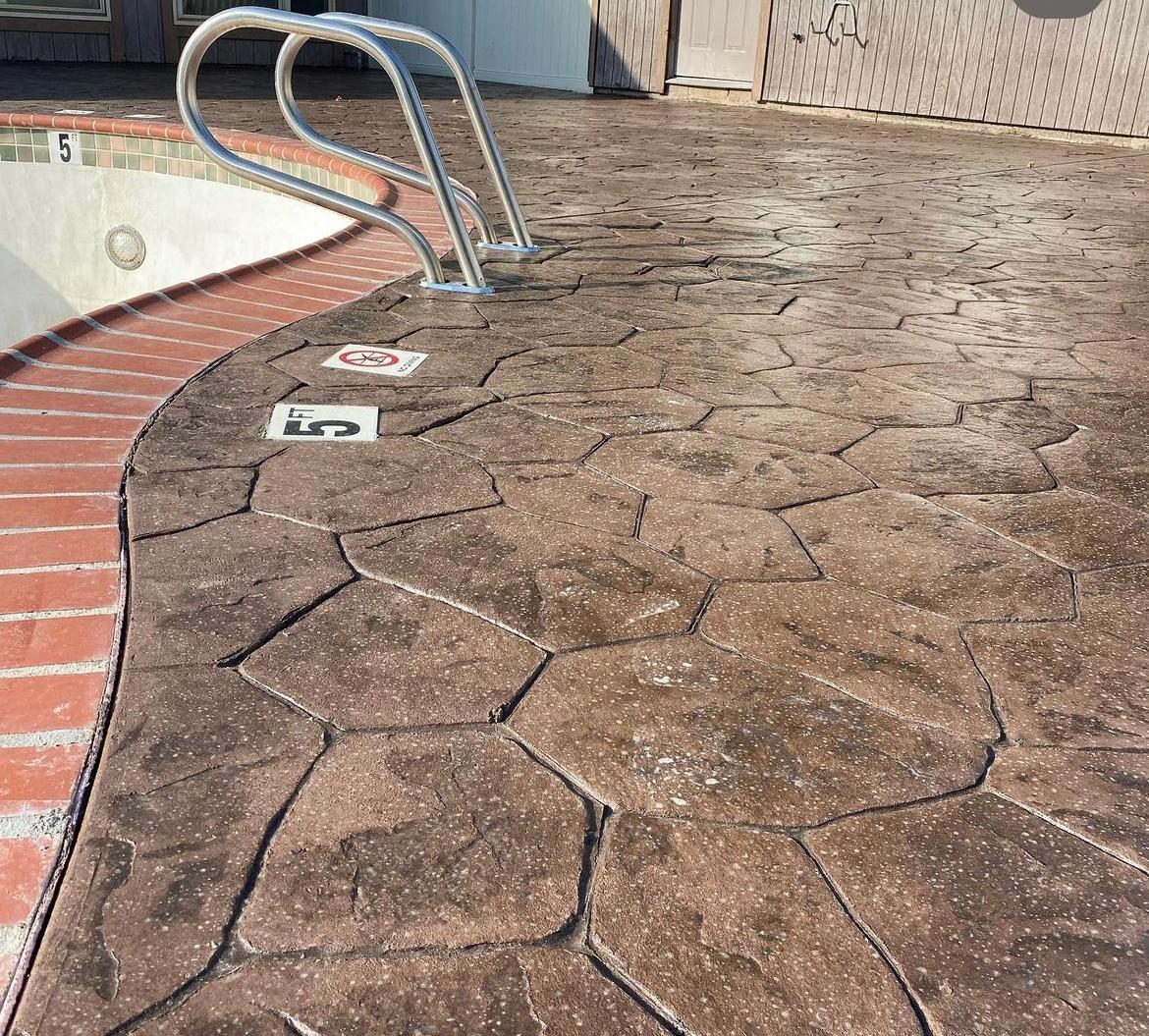
Quick answer: Stamped concrete runs 30–50% cheaper upfront and delivers a seamless, high-end look. Pavers cost more but are easier to repair and handle ground movement better. Both work well in Utah when installed correctly.
If you are planning a patio, pool deck, or walkway in the Salt Lake City area, you have probably narrowed it down to two options: stamped concrete or pavers. Both look great. Both add value to your home. But they are very different in cost, maintenance, and how they hold up through Utah winters.
We install both at Level Up Concrete & Landscape, so this is not a pitch for one over the other. It is a straight comparison based on what we see on job sites every week, so you can pick the right material for your yard and budget.
Cost Comparison: Stamped Concrete vs Pavers
Price is usually the first question homeowners ask, so let us start there. These numbers reflect what we typically see across the Wasatch Front in 2026, including materials and labor.
| Cost Factor | Stamped Concrete | Pavers |
|---|---|---|
| Material per sqft | $5–$8 | $7–$12 |
| Labor per sqft | $7–$10 | $8–$13 |
| Total per sqft (installed) | $12–$18 | $15–$25 |
| 300 sqft patio (total) | $3,600–$5,400 | $4,500–$7,500 |
For a typical 300-square-foot patio, stamped concrete saves you roughly $900 to $2,100 compared to pavers. That gap widens on larger projects like driveways and pool decks. If you want a more detailed breakdown of concrete pricing, check out our guide on concrete patio cost per square foot in Utah.
Stamped Concrete: Pros and Cons
Pros of Stamped Concrete
- Lower upfront cost. At $12–$18 per square foot installed, stamped concrete is the more budget-friendly option for most projects.
- Seamless, uniform look. Because it is one continuous pour, there are no joints or gaps. You get a clean, consistent surface across the entire area.
- Fast installation. Most stamped concrete patios can be poured and finished in 1–3 days, depending on size. Pavers take significantly longer.
- Wide range of patterns and colors. Slate, flagstone, brick, wood plank — stamped concrete can mimic almost any material at a fraction of the cost.
Cons of Stamped Concrete
- Can crack over time. Concrete is rigid. Even with proper control joints, hairline cracks can develop — especially through repeated freeze-thaw cycles.
- Harder to repair. If a section cracks or chips, patching it to match the original pattern and color is difficult. You usually notice the repair.
- Requires resealing every 2–3 years. The sealer protects the color and surface finish. Skip it and the stamped pattern starts to fade and wear down.
Pavers: Pros and Cons
Pros of Pavers
- Individual replacement. If one paver cracks or stains, you pull it out and drop in a new one. No color-matching headaches, no visible patches.
- No cracking. Because each paver is a separate unit with sand joints, the surface flexes with the ground instead of fighting it.
- Premium look. There is something about real interlocking stone or brick that stamped concrete cannot fully replicate. It has depth and texture that stands out.
- Flexible base handles settling. Pavers sit on a compacted gravel and sand base that can absorb minor ground movement without damage to the surface.
Cons of Pavers
- Higher cost. At $15–$25 per square foot, pavers typically run 30–50% more than stamped concrete for the same area.
- Weeds between joints. Sand joints are an open invitation for weeds. Polymeric sand helps, but it breaks down over time and needs to be reapplied.
- Settling and shifting. Without proper base preparation and edge restraints, pavers can shift, sink, or become uneven over the years.
- Longer installation. Each paver is placed by hand. A project that takes 2 days with stamped concrete might take 4–5 days with pavers.
How Utah’s Climate Affects Both Options
Utah’s freeze-thaw cycle is the biggest wildcard in this decision. Temperatures along the Wasatch Front regularly swing from the teens to the 40s and back during winter months. That constant expansion and contraction takes a toll on any hardscape surface.
Stamped concrete handles freeze-thaw well when the base is prepared correctly. That means a compacted gravel sub-base, proper drainage, and the right concrete mix. Skip any of those steps and you will see cracking within the first few winters. Resealing also matters — it prevents moisture from penetrating the surface and causing spalling when it freezes.
Pavers are naturally more forgiving because the joints allow each unit to move independently. But if the base is not properly compacted or drainage is poor, individual pavers will heave and settle unevenly. You will end up with trip hazards and pooling water. The fix is usually pulling up the affected section, re-compacting the base, and relaying the pavers.
Bottom line: both options perform well in Utah if the contractor takes base prep seriously. That step matters more than the surface material itself.
Maintenance Comparison Over 10 Years
| Maintenance Task | Stamped Concrete | Pavers |
|---|---|---|
| Resealing | Every 2–3 years (~$1.50/sqft) | Optional every 3–5 years |
| Weed control | Minimal (no joints) | Ongoing (sand joints) |
| Crack repair | Possible — hard to match | Swap individual pavers |
| Joint sand replacement | N/A | Every 3–5 years |
| Estimated 10-year maintenance cost (300 sqft) | $1,500–$2,000 | $500–$1,200 |
Stamped concrete costs less upfront but more in ongoing maintenance. Pavers cost more to install but are cheaper and easier to maintain over the long haul. When you factor in 10 years of ownership, the total cost gap between the two narrows considerably.
Which Should You Choose? It Depends on the Project
There is no single right answer. The best choice depends on where you are installing it, how you plan to use it, and what fits your budget.
- Patio: Stamped concrete is the most popular choice for backyard patios in Utah. It gives you a high-end look at a lower price point, and the seamless surface is easy to furnish and keep clean.
- Driveway: Stamped concrete handles vehicle traffic well when poured at the right thickness (at least 4 inches). Pavers also work for driveways but cost significantly more and require edge restraints to prevent shifting under tire loads.
- Pool deck: Pavers have a slight edge here. They stay cooler underfoot, drain water better through the joints, and individual pieces can be replaced if they get damaged by pool chemicals.
- Walkway: Either option works. For a front walkway where curb appeal matters, pavers add a premium touch. For a side-yard path or utility walkway, stamped concrete is the practical choice.
If budget is the main concern, stamped concrete almost always wins. If you want the easiest long-term maintenance and do not mind paying more upfront, go with pavers.
Get the Right Install — That Is What Matters Most
Here is what we tell every homeowner: the material matters, but the installation matters more. A poorly installed paver patio will fail faster than a well-installed stamped concrete one, and vice versa. Base preparation, drainage, compaction, and proper finishing are what separate a surface that lasts 20 years from one that starts falling apart after 3.
At Level Up Concrete & Landscape, we are a licensed B100 contractor and we have been doing this work across the Salt Lake Valley for over 7 years. We will walk your property, talk through both options with you, and give you an honest recommendation based on your project — not on what makes us more money.
Ready to Compare Options for Your Yard?
Get a free, no-pressure estimate. We will measure your space, talk through stamped concrete and paver options, and give you real pricing within 24 hours.
Request Your Free Estimate