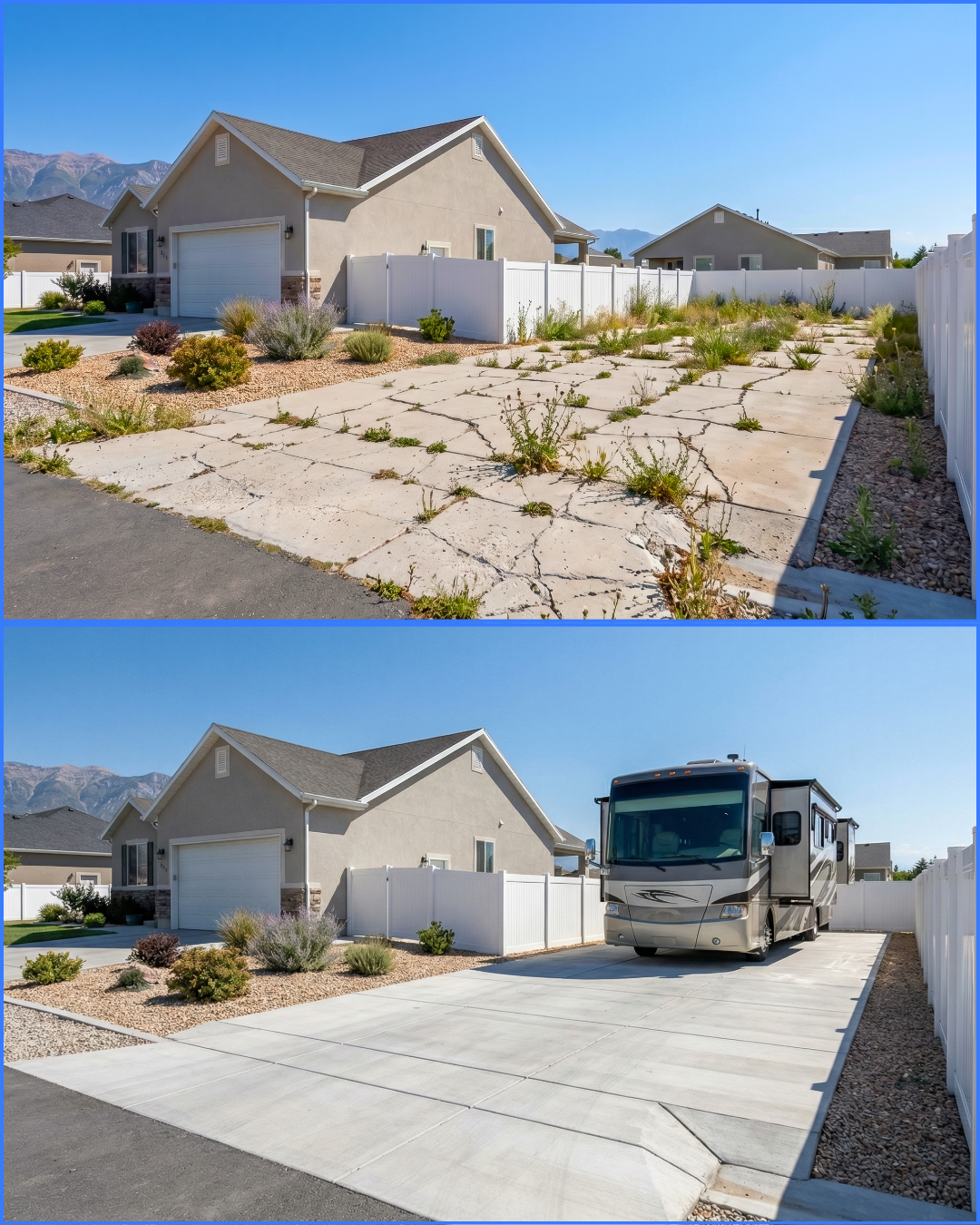
Best Time to Pour Concrete in Utah (Seasonal Guide)
Quick answer: Spring (late March through May) and fall (September through early November) are the best times to pour concrete in Utah. Daytime temperatures in the 50–80°F range give the slab the ideal curing conditions. Summer pours are doable with precautions. Winter pours are possible but require heaters, blankets, and cold-weather admixtures — and cost more.
Timing a concrete pour is one of those decisions that feels small until the weather goes sideways. Pour on the wrong day and you can end up with surface cracking, freeze damage, or a slab that never reaches full strength. Pour during the right window and you get a driveway, patio, or RV pad that lasts decades.
Along the Wasatch Front, our seasons swing hard. We get 95°F afternoons in July and 10°F nights in January. That range matters for concrete because the chemical reaction that hardens it (called hydration) is extremely sensitive to temperature. Here’s what we tell our customers when they ask us when to book a pour.
Why Temperature Matters for Concrete Curing
Concrete doesn’t “dry.” It cures. The cement reacts with water to form crystals that bind the aggregate together, and that reaction needs the right temperature to happen properly.
The Ideal Range: 50 to 90°F
The American Concrete Institute recommends placing concrete at temperatures between 50 and 90°F. Inside that window, the slab cures evenly, gains strength predictably, and finishes clean.
What Happens If It’s Too Cold
Below about 40°F, hydration slows down dramatically. Below 32°F, any water in the concrete can freeze before the slab has set. Freezing water expands and ruptures the internal structure of the slab — you end up with microscopic cracks that weaken the concrete for its entire lifespan. A slab that freezes in its first 24 hours may only reach 50 to 60 percent of its designed strength.
In Utah, this is a real risk for early spring and late fall pours when overnight lows still dip into the 20s. Even a single freezing night during the first two or three days of curing can do permanent damage.
What Happens If It’s Too Hot
On the other end, temperatures above 90°F (especially with low humidity and wind) cause the surface of the slab to lose moisture faster than the concrete can absorb and use it. You get surface cracking, a weak top layer, and a slab that finishes poorly. Utah summers are dry and windy, which makes this worse than raw temperature alone would suggest.
Utah Season-by-Season Breakdown
Here’s how each season plays out along the Wasatch Front, based on what we actually deal with on job sites.
| Season | Window | Conditions | Verdict |
|---|---|---|---|
| Spring | Late March – May | 50–75°F days, crisp nights, low humidity | Ideal. Book early. |
| Summer | June – August | 85–100°F days, dry, windy | Doable with precautions |
| Fall | September – early November | 60–80°F days, cool nights | Second ideal window |
| Winter | Late November – February | 20–45°F days, freezing nights | Cold-weather pour only |
Spring: The Best Window (and the Most Competitive)
Spring is when concrete contractors along the Wasatch Front are busiest. Daytime highs are in the 50s and 60s, the ground has thawed, and nights are cold enough that the slab doesn’t flash-cure on the surface. Almost every property we pour at this time of year turns out clean.
The catch: you’re competing with every other homeowner who waited out the winter. By mid-April most Utah contractors are booked four to eight weeks out. If you’re thinking about a spring pour, start the estimate conversation in late February or early March. By May, you’re probably looking at an early summer slot.
Summer: Possible, But Requires Planning
Utah summers are hot and dry. We still pour plenty of driveways and patios in July and August — but we adjust. On a 95°F day, we’ll:
- Schedule the pour for early morning (often 6 or 7 AM) to avoid peak afternoon heat
- Dampen the sub-base before the pour so the slab isn’t drawing moisture downward
- Use a retarder admixture in the mix to slow the set time
- Fog-mist the slab during finishing to prevent surface drying
- Cover the slab with curing blankets or plastic sheeting immediately after finishing
When a summer pour is handled this way, it turns out just as well as a spring pour. When it’s not, you see surface cracking within the first week.
Fall: The Underrated Window
September and October are some of our favorite months to pour. Daytime temperatures are perfect, nights are cool but not yet freezing, and the spring rush is long over. Lead times drop. If you missed the spring window, aim for September or early October rather than pushing into winter or waiting until next year.
The cutoff for a reliable fall pour in most of the valley is roughly the first week of November. After that, overnight lows start hitting the low 30s consistently, and you need cold-weather protection measures.
Winter: Only With the Right Setup
We do pour concrete in winter — but only for customers who need it done and are willing to pay for the extra measures required. A proper winter pour in Utah involves:
- Cold-weather admixtures (calcium chloride or non-chloride accelerators) added to the mix
- Heated water or heated aggregate from the batch plant
- Thermal blankets covering the slab for the first three to seven days
- Ground heaters or enclosed tents with propane heat if temperatures drop into the 20s or below
- Extended cure monitoring to confirm the slab reaches adequate strength before uncovering
These measures add 10 to 25 percent to the total project cost depending on how cold it gets and how long the protection stays on. For most homeowners, it’s worth waiting until spring. For a commercial project that can’t wait, or a tear-out that has to happen before a deadline, a properly executed winter pour is entirely viable.
How Professional Contractors Handle Temperature Extremes
Experienced contractors watch the weather like farmers. Before we commit to a pour date, we check the forecast for the 72 hours following placement — not just the day of. The first three days are when the slab is most vulnerable.
We look specifically for:
- Overnight lows for the three nights after placement. A single night below 32°F without protection can damage the slab.
- Wind forecasts. Dry wind accelerates surface evaporation. A 20 mph wind on an 85°F day can be worse than a calm 95°F day.
- Precipitation. Light rain on fresh concrete can ruin the surface finish. Heavy rain within the first four hours is a disaster.
- Humidity. Utah is dry, which speeds evaporation. We account for this in mix design and curing protocols.
If the forecast isn’t right, we move the pour. Pushing a pour back a day or two to dodge a freeze or storm is always the right call — a bad pour lasts 30 years.
How Far in Advance Should You Schedule?
Here’s a realistic timeline for booking a concrete project in Utah, based on the season you want your pour to happen:
| Desired Pour Window | Start Conversation | Typical Lead Time |
|---|---|---|
| March – May (spring) | Mid-February at the latest | 4–8 weeks |
| June – August (summer) | Early May | 3–5 weeks |
| September – October (fall) | Late July / early August | 2–4 weeks |
| November – February (winter) | Any time — shorter waits | 1–3 weeks |
These are ranges, not promises. During peak spring, good contractors can book out even further than eight weeks, especially for larger projects like full driveway replacements or stamped patios. If you’re planning to pour an RV pad or a thicker slab, add another week for the extra rebar work and base prep.
Can You Pour Concrete in the Rain?
Light rain in the hours after finishing is survivable if the slab has already set up and the surface has been broomed or textured. Heavy rain within the first few hours after placement will pit and damage the finish, and no amount of troweling will recover it. On rainy days we either postpone or tent the pour area with plastic and heaters.
One misconception we hear often: “Doesn’t concrete need water to cure? Isn’t rain good?” Concrete does need moisture for hydration, but it needs moisture from the inside. Adding surface water during the critical first few hours messes up the water-to-cement ratio right at the surface, which is exactly where you don’t want it weakened.
What About Cost? Does Season Affect Price?
Yes, but less than you might think.
Spring pours are priced at standard rates, but lead times are long and you may have fewer contractors to choose from. Summer rates are the same, but you’re paying for the extra precautions (early starts, admixtures, curing blankets) which some contractors bundle into the price. Fall is usually the sweet spot on both availability and price. Winter pours add 10 to 25 percent because of the protection measures described above.
Material cost itself doesn’t shift much with season. What changes is labor complexity and the cure-protection equipment. A winter driveway pour might require three days of heated enclosure — that equipment rental and labor time shows up on your invoice.
If you want the full breakdown of how pricing works, our guide on concrete patio cost per square foot covers the line items in detail.
Our Recommendation
If you’re planning a concrete project in Utah, aim for April through early October. Within that range:
- Start the estimate conversation 6 to 8 weeks before your target pour date. This is especially important for spring.
- Be flexible on the exact day. Good contractors move pours around the weather, and that flexibility is how you get a clean finish.
- Don’t try to squeeze a big project into late November just to “finish this year.” A spring pour always beats a rushed winter pour.
- If you have to pour in winter, work only with a contractor who regularly does cold-weather concrete. Ask specifically about blankets, admixtures, and the cure-monitoring approach they use.
Along the Wasatch Front, spring slots fill up faster every year. If a new driveway, patio, or RV pad is on your list for 2026, the time to lock in a date is now.
Spring Slots Are Filling Up
Get on the calendar for this season’s pour window. We’ll walk your property, discuss timing, and give you an honest quote — usually within 24 hours.
Get Your Free Estimate